
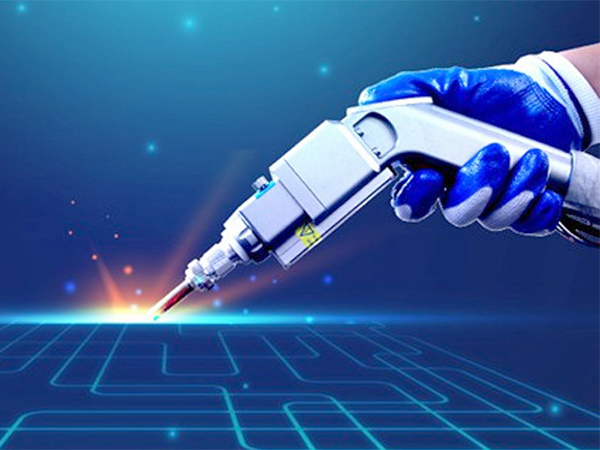
Burn-Through & Inner Wall Oxidation on Thin-Walled Tubes? Medical Device Laser Autogenous Welding in 3 Core Scenarios
In the manufacturing of minimally invasive surgical instruments and endoscopes, welding of thin stainless steel tubes remains a widely recognized industry challenge. Extremely thin wall thickness and strict cleanliness requirements make it difficult for conventional welding methods to satisfy dual requirements: no burn-through and zero oxidation.
Three Major Pain Points of Traditional Processes
At a medical device contract manufacturer, production managers struggle with low yield rates for endoscopic metal tube welding. These components use 0.2mm‑0.5mm 316L stainless steel tubes. Conventional TIG welding suffers three critical drawbacks:
- Poor heat-input control and frequent burn-through: Thin-walled tubes are highly heat-sensitive. Minor deviations in arc welding lead to tube collapse and penetration, driving high scrap rates.
- Blackened inner wall and insufficient cleanliness: Medical-grade devices require perfectly smooth inner surfaces free of oxide scale and weld spatter. Even with internal argon shielding, high-temperature oxidation cannot be fully eliminated. Subsequent pickling and passivation raise costs and risk residual chemical contaminants.
- Severe thermal distortion hurting assembly precision: Large heat-affected zones bend tubing. Straightening procedures are tedious and may degrade the original mechanical properties of materials.
Laser autogenous welding emerges as the key solution to meet strict zero-defect medical manufacturing standards.
Three Core Application Scenarios: Eagle Laser Autogenous Welding Solutions
Drawing on deep expertise in precision welding, Eagle Laser develops automated platform laser autogenous welding systems tailored for medical device requirements. No filler wire is added; the base material melts and fuses on its own to satisfy medical cleanliness and precision specifications.
① Endoscope Tube Butt Welding: Micron-scale temperature control eliminates collapse and burn-through
- Pain point: Endoscope tubes have wall thickness around 0.3mm. Butt welding easily creates concave or convex deformation, obstructing internal optical components.
- Eagle Laser Solution: Eagle precision fiber laser welding system focuses laser energy into tiny spots via superior beam quality. Pulse waveform precisely regulates heat input to realize instant melting and rapid solidification.
- Result: Uniform weld width, inner and outer wall flatness controlled within micron tolerance. Tube collapse and burn-through are fully prevented with excellent tube concentricity.
② Hermetic Welding for Minimally Invasive Surgical Tools: Spatter-free welds for biocompatibility
- Pain point: Sealed housings for forceps and ultrasonic scalpel tips must withstand high-frequency vibration and body fluid corrosion. Detached micro spatter from traditional welding may enter human tissues and trigger severe medical incidents.
- Eagle Laser Solution: Eagle automated platform autogenous laser welding adopts non-contact processing to eliminate electrode contamination and spatter. Custom fixtures and 360° rotary welding guarantee 100% fusion of circumferential welds.
- Result: Dense, pore-free welds with mechanical strength matching base metal. Zero spatter and zero particle shedding to fulfill biocompatibility and stringent air-tightness testing for medical devices.
③ Medical Fluid Pipeline Splicing: Zero inner-wall oxidation to remove pickling procedures
- Pain point: Medical infusion and pharmaceutical fluid pipelines demand ultra-smooth inner surfaces. Oxidation discoloration after conventional welding requires complicated pickling and passivation.
- Eagle Laser Solution: Eagle Laser autogenous welding integrates high-precision coaxial/side-shield high-purity gas modules to fully isolate the molten pool from air.
- Result: Fine fish-scale weld profile with bare metallic inner surface, no oxidation or discoloration. Pickling, passivation and ultrasonic cleaning are eliminated, cutting single-piece cost by over 30%.
Why Choose Eagle Laser Precision Welding Solutions?
Based in Changchun, birthplace of China’s first laser, Eagle Laser converts industry-university-research strengths into real production capacity:
- High beam quality & high-reflection resistance: Self-developed optical system delivers ultra-stable energy output and maintains stable molten pools even for highly reflective materials.
- Automation & flexible compatibility: Platform machines integrate easily with CNC, robotic arms and vision positioning systems, supporting flexible small-batch multi-variant medical production lines.
- Full-process technical support: From sample testing and parameter optimization (defocus, pulse width tuning) to mass production, we provide turnkey technical services.
Free Sample Testing — Witness Laser Precision
Every upgrade in medical equipment relies on breakthroughs in manufacturing technology. If you encounter thin-part welding issues including deformation, oxidation and low productivity, send workpieces to Eagle Laser for free process validation.
About Eagle Laser
Changchun Eagle Laser Equipment Co., Ltd. is located in Changchun, birthplace of China’s first laser. As a high‑tech enterprise within Changchun New District Optoelectronics & Intelligent Manufacturing Industrial Park, it leverages local optoelectronic industry and research‑institute resources. The company focuses on R&D and manufacturing of laser welding, cutting, marking and cleaning equipment. It holds 2 invention patents and more than 20 utility‑model patents and software copyrights. Its products serve automotive manufacturing, precision machinery, advertising sheet‑metal and other sectors and are sold worldwide.
Inquiry Hotline: 132 3430 6142
Email: sales01@flelaser.com
Website: www.flelaser.com
Douyin: Changchun Eagle Laser Equipment Co., Ltd. (Watch real‑world product videos)
Address: No. 2888 Zhongsheng Road, North Lake Sci‑Tech Development Zone, Changchun City, Jilin Province